Nestlé says that it's developed a new method to utilize 30% more of byproducts from cocoa fruits to produce chocolate.
In an August 20 release, the company described how cocoa beans are typically extracted from pods inside of cocoa fruits when they're harvested. The beans are then fermented, dried, roasted, and ground into a liquor that's used to make chocolate. Throughout that process, the fruit's pulp, placenta and pod husk are unused and cast aside.
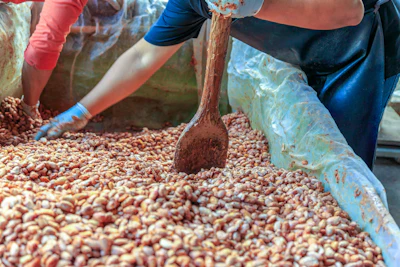
Nestlé's new technique has farmers collect everything inside the pod as a wet mass — pulp, placenta and all — which ferments naturally. The mass is ground, roasted and dried into chocolate flakes, and used in the final chocolate product without sacrificing the taste produced by the previous method.
"With climate change increasingly affecting cocoa yields around the world, we are exploring innovative solutions that could help cocoa farmers maximize the potential of their harvests," Nestlé head of research Louise Barrett said.
Global cocoa production fell by 14% during the 2023-24 growing season, as months of extreme dry weather slowed output in Côte d’Ivoire and Ghana, where roughly 60% of the world's cocoa is produced. In its fourth quarter report for 2024, Oreo and Toblerone maker Mondelēz International also warned that the shortage would lead to record cost inflation for cocoa in 2025.
Nestlé is hoping to guard against those impacts by using its new harvesting technique to improve crop yields, and allow farmers to focus more time on other helpful agricultural practices like pruning. The project is still in the pilot stage, although the company says that it's looking at ways to apply the method on a larger scale.