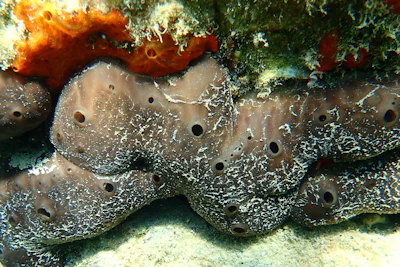
Scientists are exploring whether sea sponges could help clean up polluted ports, after discovering that one species thrived during a 15-month trial in a harbor along Spain’s Costa Brava.
According to The Guardian, a study from the Spanish National Research Council sought to determine whether certain species of sea sponges could survive in polluted waters, with an eye toward potentially using them to help restore degraded harbor ecosystems. Prior research demonstrated how the aquatic invertebrates can filter pollutants from large bodies of water and cycle them into nutrients, providing a boost to biodiversity and attracting other marine animals such as worms and crustaceans.
Read More: How Marine Mollusks are Teaching Us to Build Better Batteries
In the SNRC's study, scientists focused on the survivability of five sponge species with abundant populations off the coast of Spain, while ruling out sensitive or protected species. The chosen species of sponges were collected and then moved to a polluted harbor roughly 18 miles south, where they were closely monitored by divers every 20 to 64 days over 15 months.
By the end of that period, all species of red encrusting sponges, leather sponges and stinker sponges shrank and eventually died. However, 92% of one species — the chicken liver sponge — managed to not only survive, but asexually reproduce enough to nearly double its numbers from 24 to 40. Red starfish also began to settle in the area during the trial, indicating that the sea sponge may have made its surrounding environment habitable enough for other species.
SNRC scientist Manuel Maldonado believes that the chicken liver sponge's survivability likely stems from its ability to host diverse communities of symbiotic microorganisms within its skin, which may help it withstand pollutants. Maldonado said that his team plans to look into the chicken liver sponge's unique microbiome more later on this year, while also studying the viability of other "filter feeder" organisms like oysters.


