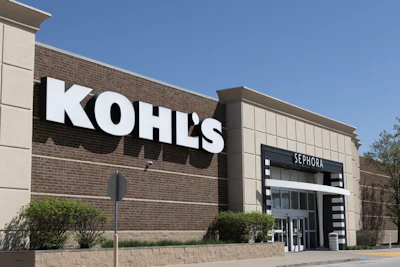
Kohl’s Corp. is asking some vendors for more time to settle invoices, according to people with knowledge of the situation, as the ailing retailer adjusts its payment strategy amid efforts to execute a turnaround plan.
Retailers will typically seek longer payment terms to manage working capital swings and conserve cash. The latest request by the department-store chain comes at a challenging time for the industry, which has struggled in the face of tepid consumer spending and supply chain disruptions caused by the Trump administration’s tariffs.
“Kohl’s regularly reviews our work to ensure we are operating as effectively and efficiently as possible,” a company spokesperson said in an emailed statement.
Despite efforts to revamp certain departments and pair with other retailers to drive traffic, Kohl’s has struggled to generate sales momentum. Quarterly revenue has fallen on an annual basis for more than three years. It has been focused on growing areas including fine jewelry, petites and women’s clothing and via tie-ups with companies including beauty chain Sephora.
The discount retailer has more than $2 billion of debt, including the recent issuance of $360 million of junk bonds in which proceeds were earmarked to meet obligations coming due this year. Those 10% bonds due in 2030 traded at 106 cents on the dollar on August 26, up from an issue price of 99 cents on May 15, according to Trace pricing data.
Meanwhile, its $500 million of senior unsecured notes maturing in 2031 changed hands at 77 cents, up from 58.25 cents on April 21.
Kohl’s is currently being led by interim Chief Executive Officer Michael Bender, who took over when the retailer announced on May 1 the termination of CEO Ashley Buchanan. The company said Buchanan directed millions of dollars of business to someone he has had a romantic relationship with.