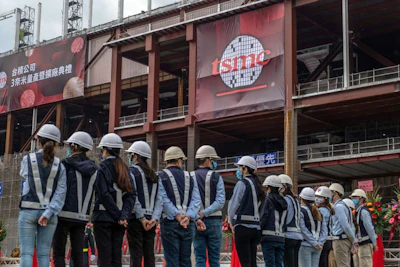
The U.S. has come to a deal on trade with Taiwan, the Trump administration announced on January 15. The agreement includes a commitment to invest $250 billion in semiconductor and technology manufacturing in the U.S. in exchange for lower tariffs on imports from the island.
The New York Times reports that the deal concludes months of negotiations focused on Taiwan’s lucrative chip-making industry, a key element in the global tech supply chain. Negotiations between the two trading partners stretched over 9 months, with the Taiwanese team, led by Vice Premier Cheng Li-chiun and the chief trade representative Yang Jen-ni, flying to Washington six times since April 2025. The White House hailed the finalized deal as “restoring American semiconductor manufacturing leadership.”
The Times points out that Taiwanese officials now face another challenge: selling the deal at home. The fear is that redirecting resources into chip manufacturing in the U.S. would cannibalize an industry seen as the centerpiece of Taiwan’s economy, and even a shield against possible attempts by China to take possession of the island, which it claims is part of its territory. From the U.S.’s point of view, by contrast, Taiwan’s absolute dominance in manufacturing the most advanced semiconductors, critical to a range of top-priority industries such as defense and artificial intelligence, makes the world’s largest economy vulnerable to geopolitical eruptions.
Read More: TSMC Reports Record Profits in Q3 as AI Fuels Demand for Chips
Taiwan has one of the largest trade deficits with the United States. Chips and electronics account for 90% of that, according to Taiwanese officials.
“We are going to bring it all over so that we become self-sufficient in the capacity of building semiconductors,” Howard Lutnick, the commerce secretary, said in a television interview on January 15.
In addition to the billions in investment by Taiwanese companies, the two sides agreed that Taiwan’s government would provide an additional $250 billion in credit guarantees to support smaller firms in the chip supply chain to expand in the United States.
In return, the Trump administration said it would lower the U.S. tariff rate on Taiwanese goods to 15% from the current rate of 20%.


