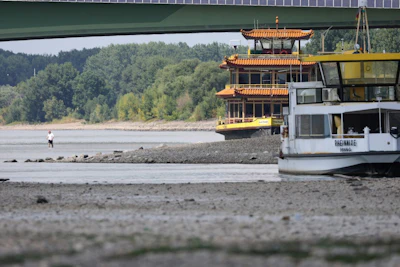
Germany’s rail network is unable to handle all the goods that are being diverted from the Rhine River — where water levels are low — with maintenance crimping capacity, rail logistics firm VTG GmbH said.
Water levels on the river, an important transportation route connecting European factories with global markets, fell to record lows this year after drought and repeated heat waves. That has driven up costs for companies and forced them to switch some traffic to rail and road, though a key part part of Germany’s rail network has undergone maintenance since July, and that has added to the strain.
While rail is handling a “substantial share” of displaced volumes, “due to the ongoing rail construction in Germany, rail cannot replace the Rhine one to one yet,” a spokesman for VTG said by email. He wasn’t able to say how much freight has switched to rail. A full block train can move 1,200 to 1,500 tons, less than a standard barge, he said.
The low water levels have restricted deliveries of diesel, heating oil, coal and cocoa through southern Germany into Switzerland. Power plants have been among those affected, and the Swiss government last week cited delays in rail freight for a potential shortage of jet fuel at Zurich airport. The airport said deliveries of jet fuel have been below normal levels for weeks, noting that there are currently no restrictions on refueling.
The work on the rail network is being done between Troisdorf, near Bonn, and Wiesbaden, west of Frankfurt, on the right bank of the Rhine, and is scheduled to finish on December 12. It’s pushing freight traffic onto the left-bank line, with longer diversion routes. The additional traffic means there is “little reserve left,” according to VTG.
That stretch of the river includes a chokepoint at Kaub where low water levels hamper vessel movements further upstream, pushing barge rates for Switzerland to a record this year. Barges loading in the Rotterdam area headed for Kaub can currently load about 280 tons, according to Riverlake. A standard Rhine barge has capacity of roughly 2,500 tons.
Switzerland’s reliance on jet fuel deliveries by rail prompted a release of reserves last week. The nation had already released a part of its petroleum reserves last month after an unplanned outage at its only refinery coincided with transport restrictions on the Rhine.


