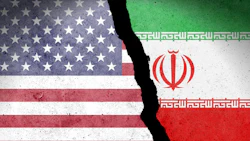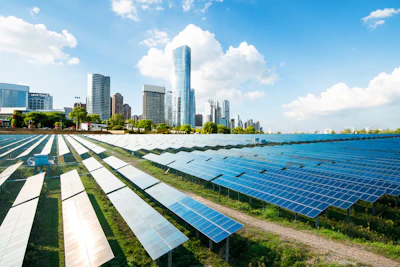
U.S. President Donald Trump signed an executive order on August 6 that sets a 15% tariff on imported products made from polysilicon, which is critical to the manufacture of semiconductors and solar panels. But, as usual, there’s a months-long ramp up to the December date when they will actually come into effect, meaning the levy is likely more of a bargaining tool in the ongoing trade war between the U.S. and China.
The order cites Section 232 of the Trade Expansion Act of 1962, which allows the federal government to impose tariffs, quotas or minimum prices on imported products if they are deemed to be a threat to national security.
The executive order also sets minimum import prices on polysilicon and related products, which means domestic producers such as Hemlock Semiconductor and Wacker Chemie will face less pressure to lower their prices in order to compete with Chinese imports.
BBC News reports that the move is intended to help protect U.S. manufacturers as they face increasing competition from China's chip industry. Solar Power World commented on August 6 that it means the price of all imported solar panels will go up.
The Chinese embassy in Washington said Washington is "abusing state power to go after Chinese businesses," adding that protectionism will not make the U.S. more competitive.
This latest executive order on imports from China follows other recent U.S. restrictions on the imports of drones, humanoid robots and other tech products. China announced a range of countermeasures in response, including tighter export controls on drones. Beijing has also launched a national security review into imported printers and copiers.
The U.S. Department of Commerce began its investigation in 2025, analyzing the demand for polysilicon in the U.S., and establishing whether domestic production can meet such demand. According to Solar Power World, polysilicon production in the U.S. was essentially gutted during the China-America trade war of the 2010s, as U.S. polysilicon producers saw their market share shrink from $1 billion in 2011 to $107 million in 2018 after China placed high duties on American-made polysilicon. China has since overtaken the global market, and is now estimated to hold a 93.5% market share.