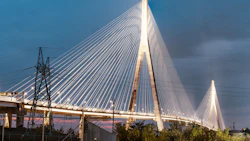
The first vehicles finally crossed the new Gordie Howe International Bridge between Windsor, Ontario, and Detroit, Michigan, on July 27 around noon, according to Fox News.
The much-delayed opening reached a peak of contentiousness on July 24, when the Windsor-Detroit Bridge Authority informed U.S. officials and VIP guests that a celebration of the opening had been canceled, but then went ahead with an event on the Canadian side only. President Donald Trump had forced delays on the bridge’s opening, leading to hurried renegotiations about costs and toll revenue splitting between the two countries.
Critics of the Trump administration pointed to the $1 million donation made earlier this year to a pro-Trump Super PAC MAGA Inc. by Matthew Moroun, private owner of the rival Ambassador Bridge across the Detroit River, who has long resisted the Gordie Howe project. The Detroit crossings have particular significance for maintaining the supply chains of the automotive industries of the U.S. and Canada, and the Ambassador Bridge has long experienced such congestion that truck drivers would make long detours to avoid it.
The new bridge was originally scheduled to open in early June. It is owned equally by Canada and the state of Michigan, but Canada covered 100% of the $4.7 biilion construction costs. Michigan and Ontario will split toll revenue after certain overhead and construction costs are met.
Read More: Questions Mount Over Canada's Deal with U.S. to Open Gordie Howe Bridge
According to Detroit Free Press, fares for the Gordie Howe International Bridge, which are less than half charged on the Ambassador Bridge, are collected exclusively on the Canadian side at the Windsor port of entry for travel in both directions. The toll lanes at the Gordie Howe International Bridge are managed to optimize traffic flow and reduce waiting times. Separate lanes move passenger and commercial vehicles, along with different lanes for different payment types.
There's also an electronic toll collection Breakaway program, which discounts tolls up to 25%, automated RFID lane access, and free vehicle tags. Members with window stickers drive through any open lane where tolls are automatically processed through prepaid accounts for individual commuters and businesses, and postpaid accounts for large commercial fleets making over 1,000 trips monthly.