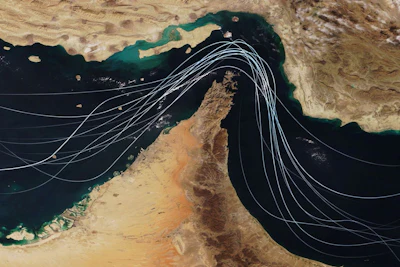
Oman and Iran are reportedly approaching a deal for opening a new temporary route through the Strait of Hormuz.
According to The Guardian, the route would be viewed as an alternative to the northern and southern routes some vessels have been using to transit the strait in recent days, although the U.S. has reportedly not been included in those talks. Iranian foreign ministry spokesperson Esmaeil Baghaei also clarified that this would not mean the strait is fully reopened, and that the waterway "will in no way return to the status it was before February 28."
“We are now going to reach an understanding on a route acceptable to both sides – neither the northern route nor the southern route – but one that respects the sovereign rights of both sides and safeguards our national interests and security,” Baghaei said in an interview. The northern route typically takes ships through waters belonging to Iran, while what is understood as the southern route goes through Omani waters. Previously, the main route for shipping through the strait went through the middle, in waters the U.S. regards as international. This is now considered impassable because of mines laid by Iran. And, in any case, it remained unclear exactly what route Baghaei was referring to.
Later on August 4, source involved in the Iran-Oman talks, said Iran wants control over inbound shipping through the Strait of Hormuz and visibility over outbound traffic, with the ability to intervene if necessary. The source said this is "the general idea currently being discussed," and specified that the outbound lane would follow a route between Iran and Oman, with exit clearance granted through Oman after notifying Iran.
According to Reuters, a so-called two-way traffic separation arrangement, which was adopted by the U.N. shipping agency in 1968 with agreement of countries in the region, created a routing system that split sailing corridors through Iranian and Omani waters.
The discussions between Iran and Oman come as prospects for a broader diplomatic breakthrough between Iran and the United States seem to be fading. After calling off planned strikes against Iran for the 12th time since the conflict began, President Donald Trump claimed that ceasefire talks would pick back up on August 3. However, Baghaei asserted in a news conference that his office is "not currently negotiating with the United States." Trump quickly fired back in a post to his Truth Social platform, calling Iranian leadership "unbelievably duplicitous," and demanding "total surrender."
In the meantime, the path forward for completely reopening Strait of Hormuz remains murky. The U.S. is continuing to blockade all Iranian shipping, while threats from Iran have restricted commercial traffic through the waterway to a small handful of vessels each day.


