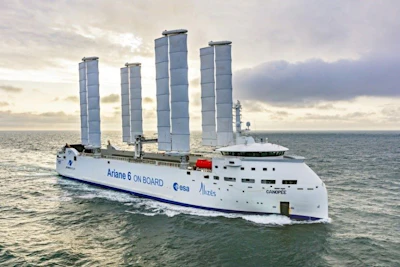
2026 has been a year of rapid market growth for the wind propulsion sector, as shipowners seek practical solutions to reduce fuel consumption and comply with tightening emissions regulations.
According to the International Windship Association (IWSA), wind-assisted and primary wind propulsion technologies are proving their economic and environmental advantages. More than 100 commercial vessels now operate with wind propulsion technology installed, representing over six million DWT of cargo capacity. At the same time, says IWSA, fleet-wide investment strategies and repeat orders increasingly replace single demonstration projects.
Read More: Newbuild Tanker Gets Suction Sails
One clear sign the technology is gaining credibility is that there will be 40 IWSA members exhibiting or hosting activities at the upcoming Shipbuilding, Machinery and Marine Technology (SMM) trade fair in September in Hamburg.
"The pace of commercial adoption continues to accelerate. We are seeing new installations, repeat orders and larger deployment programmes becoming the norm rather than the exception,” said IWSA Secretary General Gavin Allwright in an August 24 press release.
“Wind propulsion has firmly established itself as a practical, commercially viable technology that is delivering measurable fuel savings and emissions reductions today, and this is reflected in the heightened presence of wind propulsion at the industry’s largest trade fair."
“The growing presence of wind propulsion at SMM mirrors the wider transformation taking place across commercial shipping,” Allwright continued. “What was once regarded as a niche, ‘blue skies' technology has rapidly become an increasingly mainstream element of vessel decarbonisation strategies, offering shipowners immediate reductions in fuel consumption while complementing alternative fuels and energy efficiency measures. The growth in use of this energy source reflects increasing confidence from shipowners and reinforces the important role wind will play in shipping's energy transition.”


